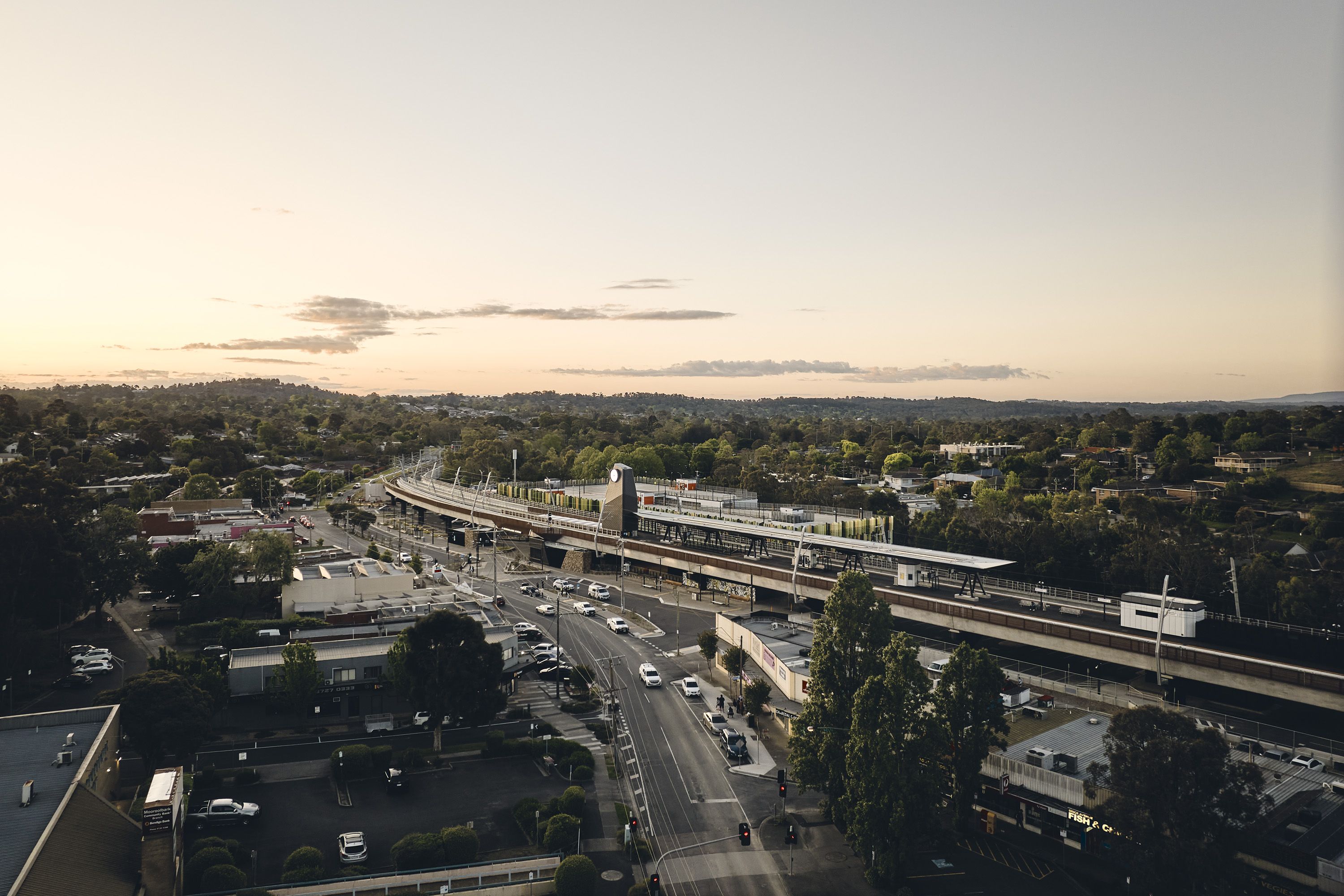
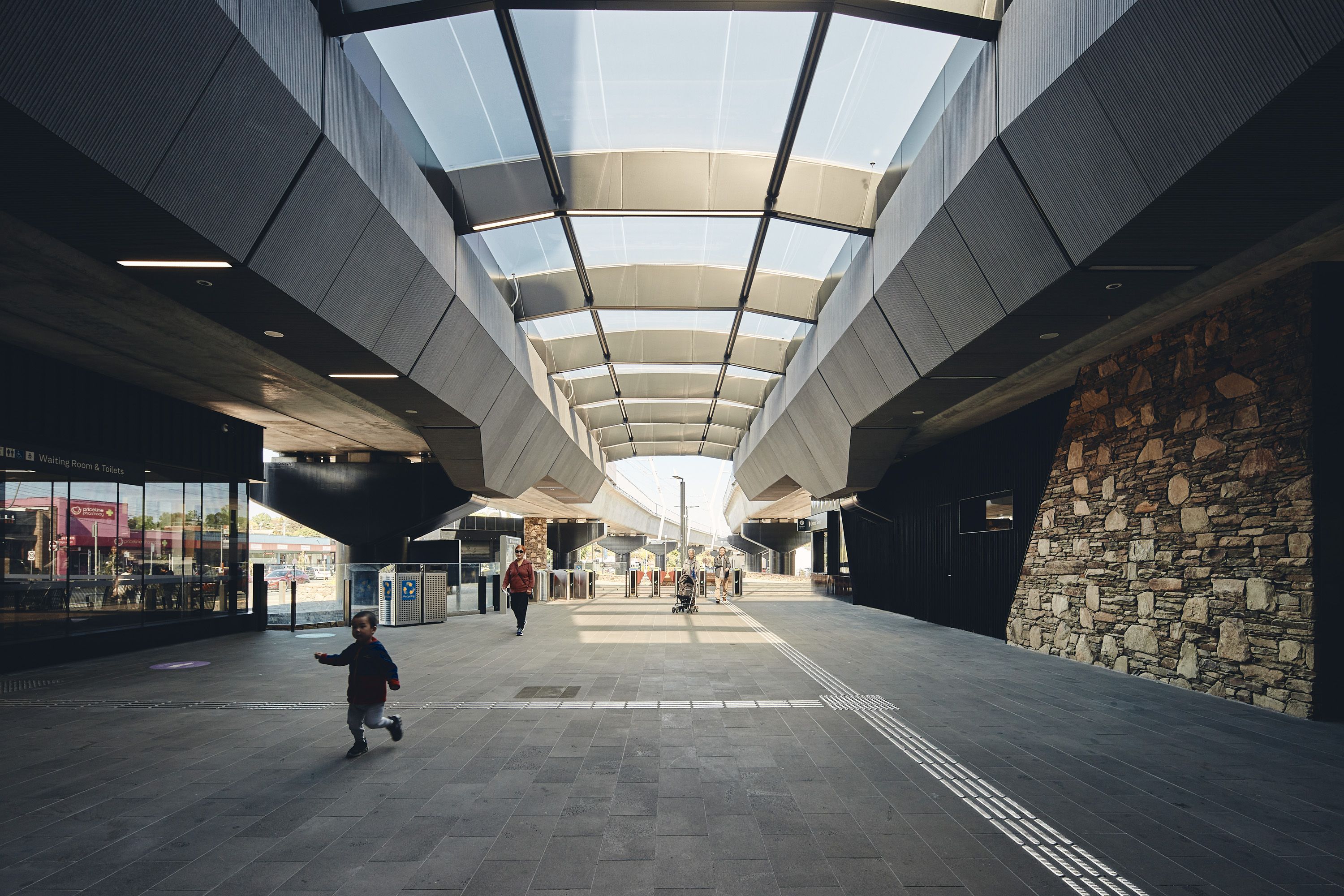
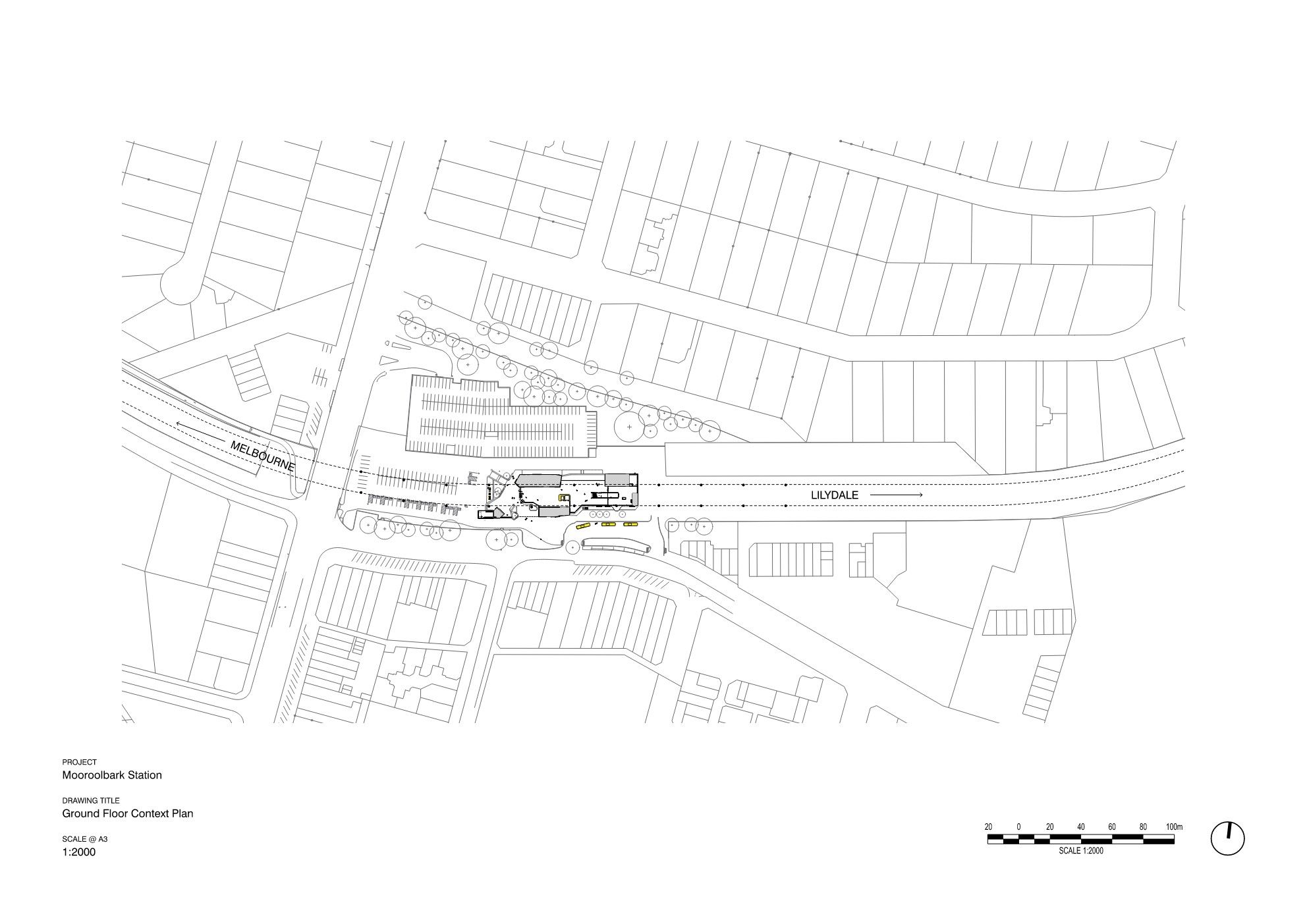
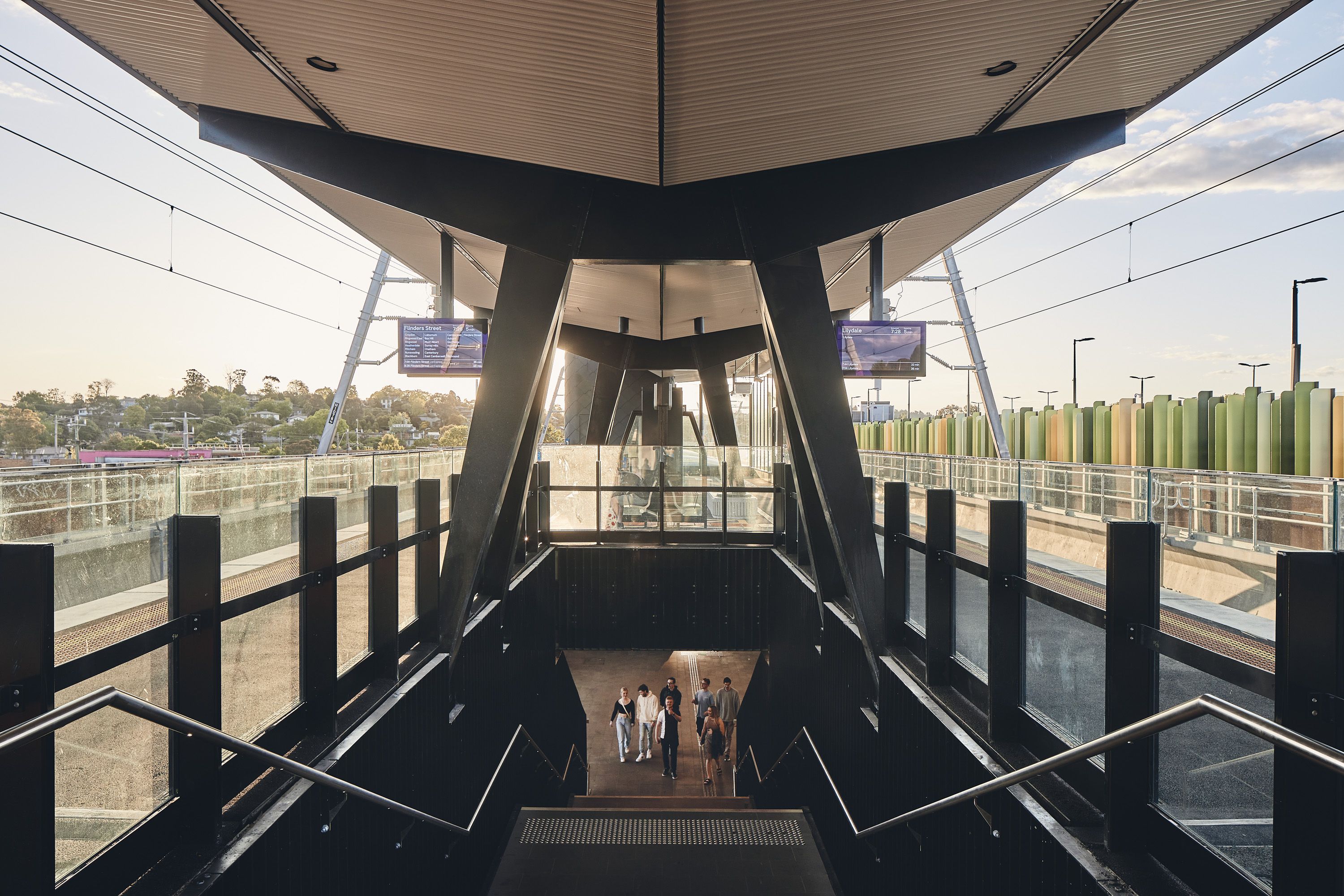
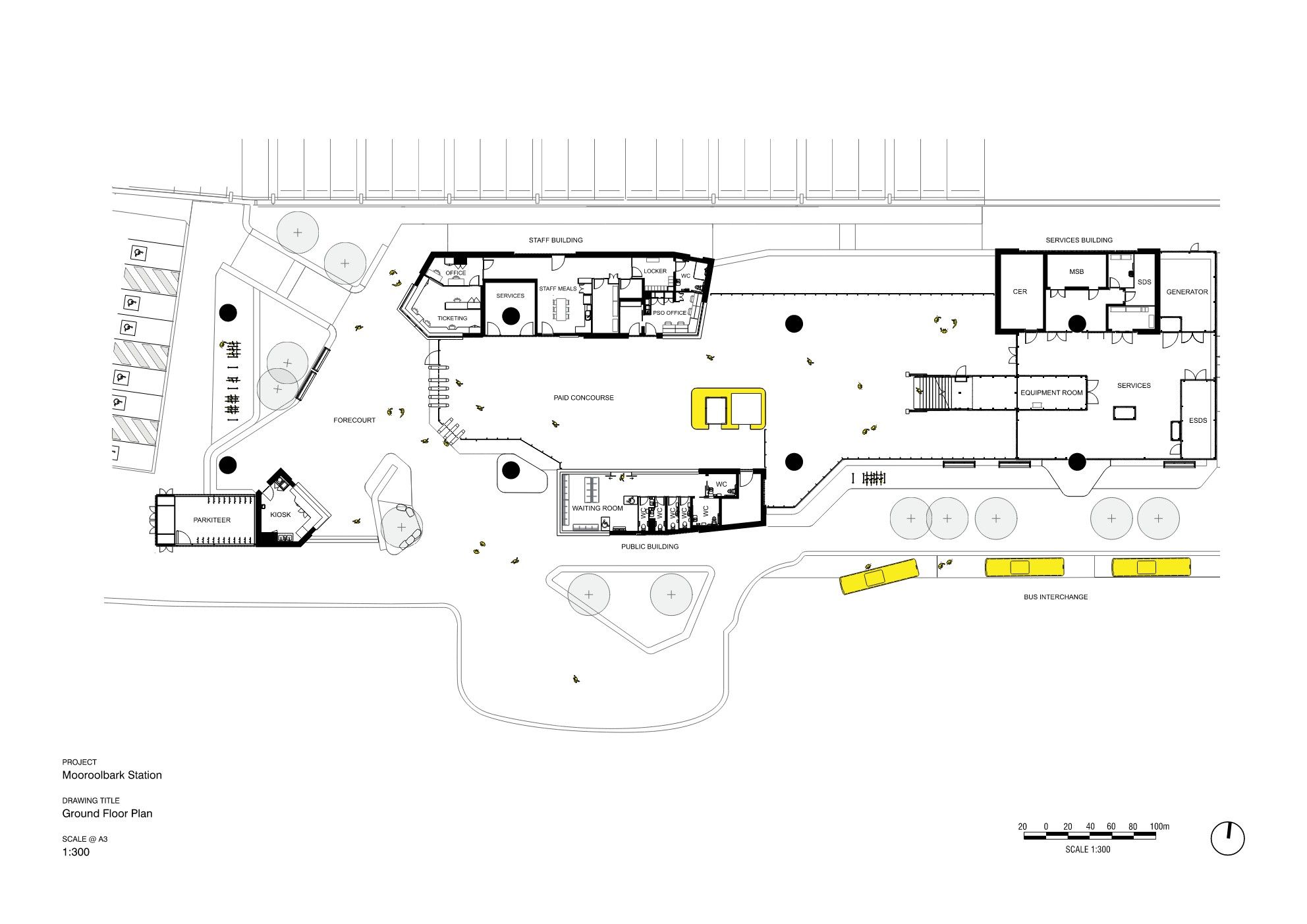
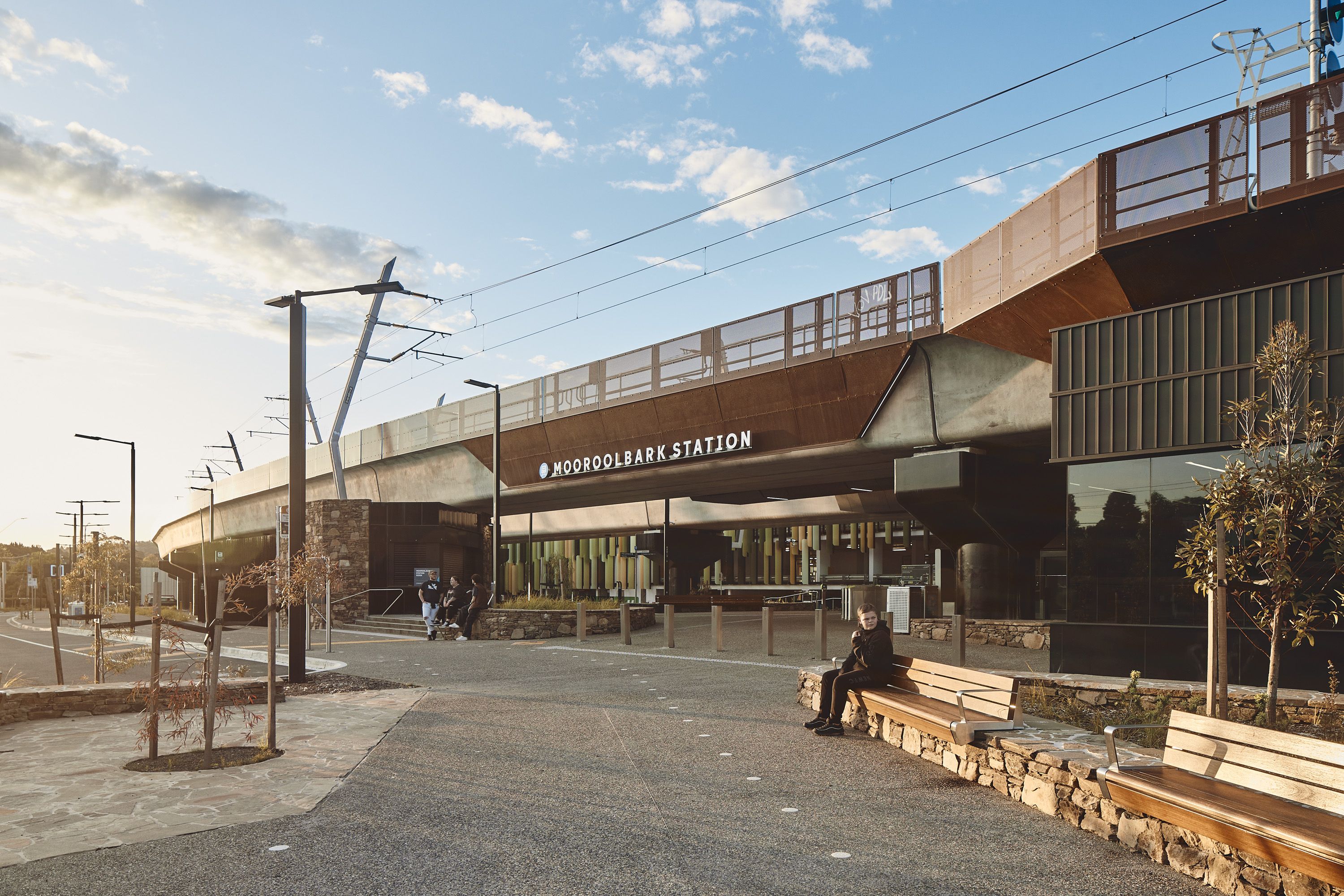
As one of 85 level crossing removal projects commissioned by the Victorian Government, BKK’s Mooroolbark Station transformation was designed as an architectural sibling to Lilydale Station, which we undertook in tandem. Working in partnership with Kyriacou Architects, Jacobs, and ASPECT Studios, we reimagined the historic Mooroolbark Station precinct for improved civic vitality, elevating the railway line to deliver an indoor/outdoor public concourse beneath with entrances and thoroughfares strategically located for convenient multi-modal transport connections. The addition of a three-storey multi-deck commuter carpark, integrated with the precinct, serves to further strengthen the new transport hub. Beyond functional infrastructure, our design demonstrates the benefits of sensitive urban design, delivering enhanced public amenity and celebrating local heritage through materiality and craftsmanship.
Laing O’Rourke for Level Crossing Removal Authority
Mooroolbark Station
A transport hub that redefines civic generosity, enhancing place vitality via urban intervention and community connection.
- Client
- Laing O’Rourke for Level Crossing Removal Authority
- Location
- Mooroolbark, VIC
- Country
- Wurundjeri Woi-Wurrung
- With
- Kyriacou Architects, ASPECT Studios, Jacobs, Jordan Rowe
- Year
- 2019 – 2022
Collaboration and Humility
Our design partnership worked together from our Alliance project offices, which facilitated a highly efficient and deeply integrated and collaborative approach to design, enabling real-time resolution of design challenges. This collaborative environment fostered meaningful dialogue between architects, engineers, and builders, and drove a construction strategy that balanced prefabrication with craft in alignment with the tight occupation timelines associated with rail projects.
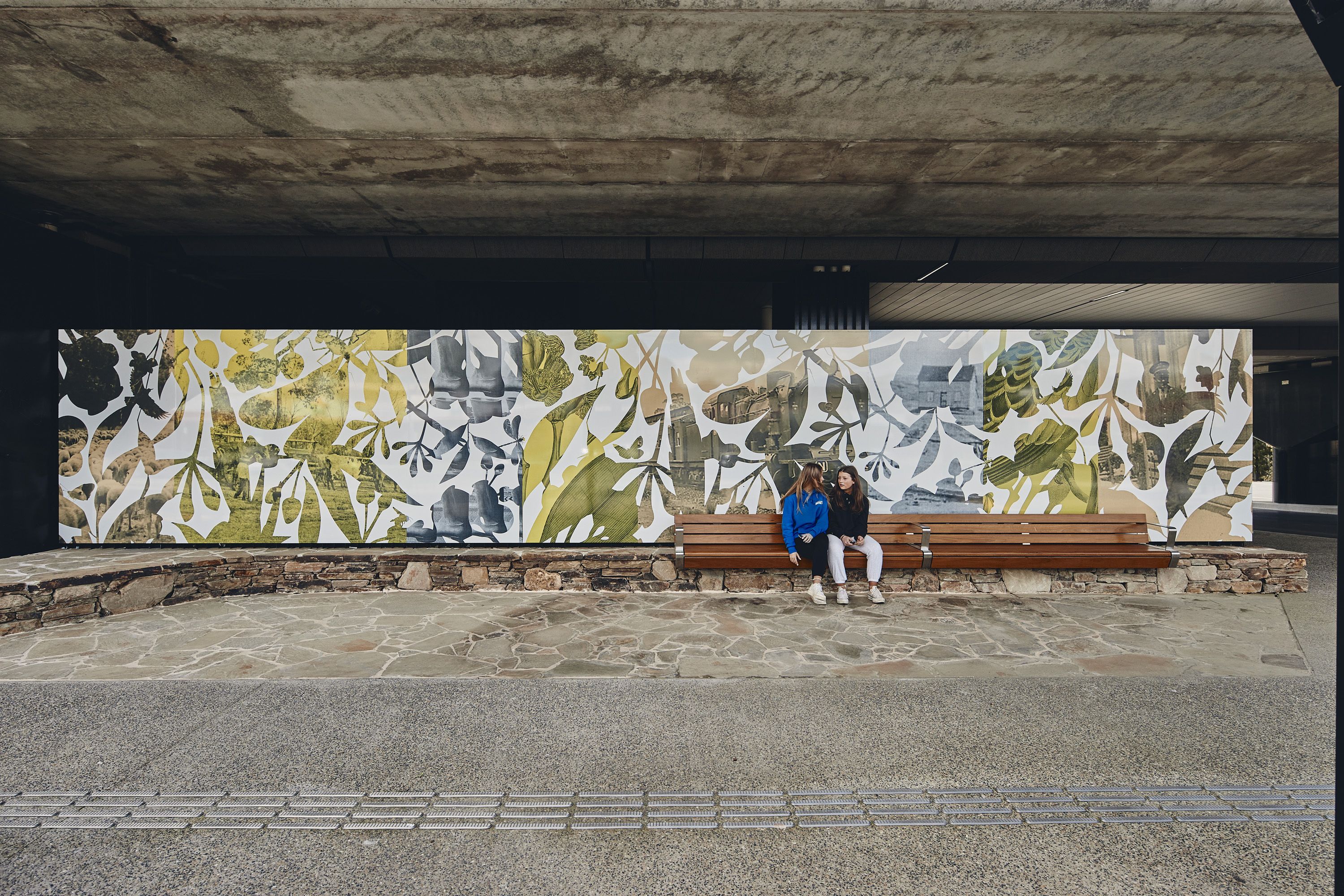
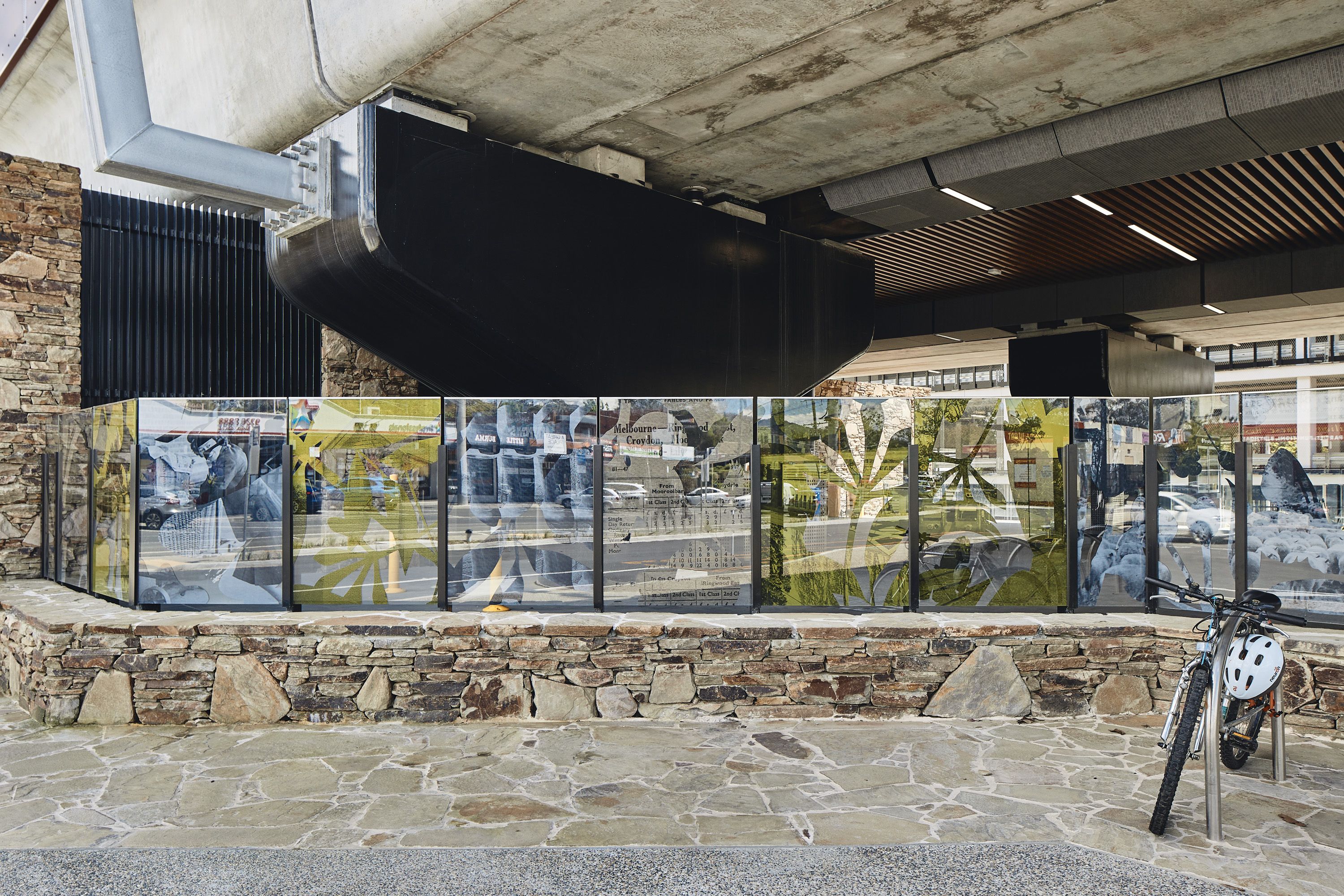
The integration of public art exemplifies this collaborative spirit, with BKK identifying elements of the design where artwork could be meaningfully integrated, and then facilitating conversations between the client and Melbourne artist/designer Jordan Rowe. Seeking guidance from the local historical society, Jordan’s artwork weaves together narratives of pioneering station master Elizabeth Meade and the humble gumboots that once lined the platforms ready for commuters’ muddy walk home, layered with images of native flora and fauna, strikingly articulated on concourse-level glass screens. This artwork was one of three options selected by the community for inclusion.
Playfulness and Innovation
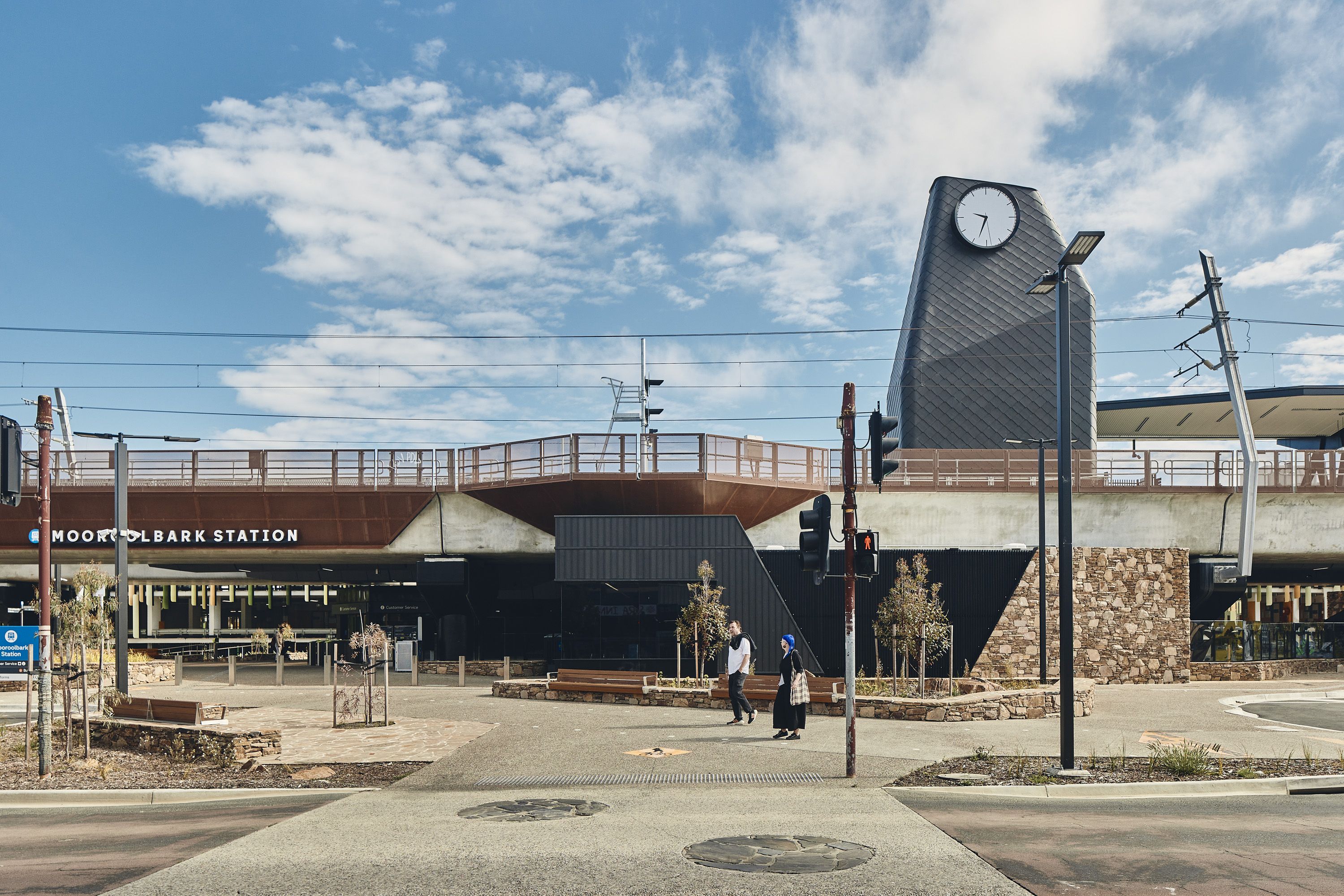
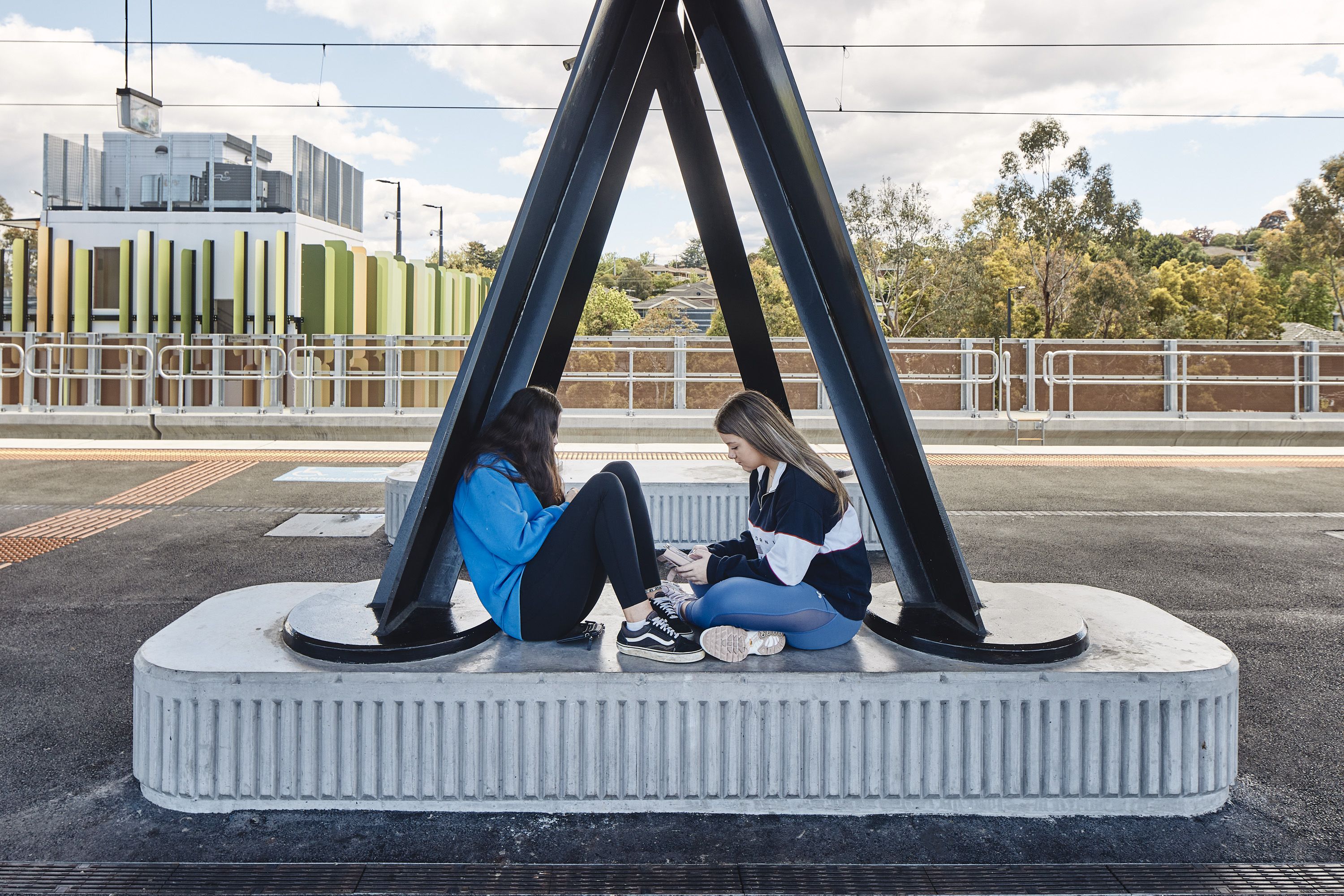
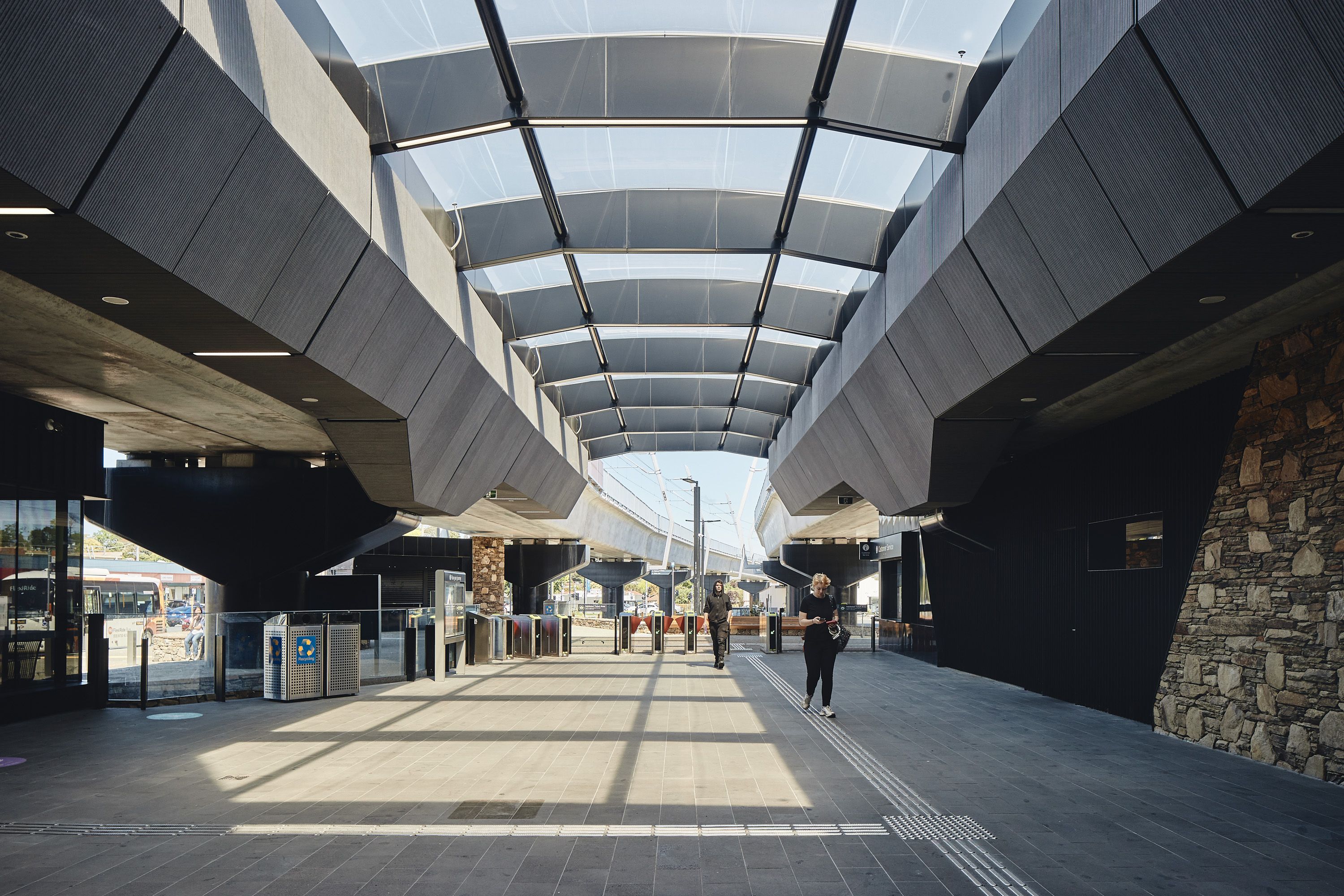
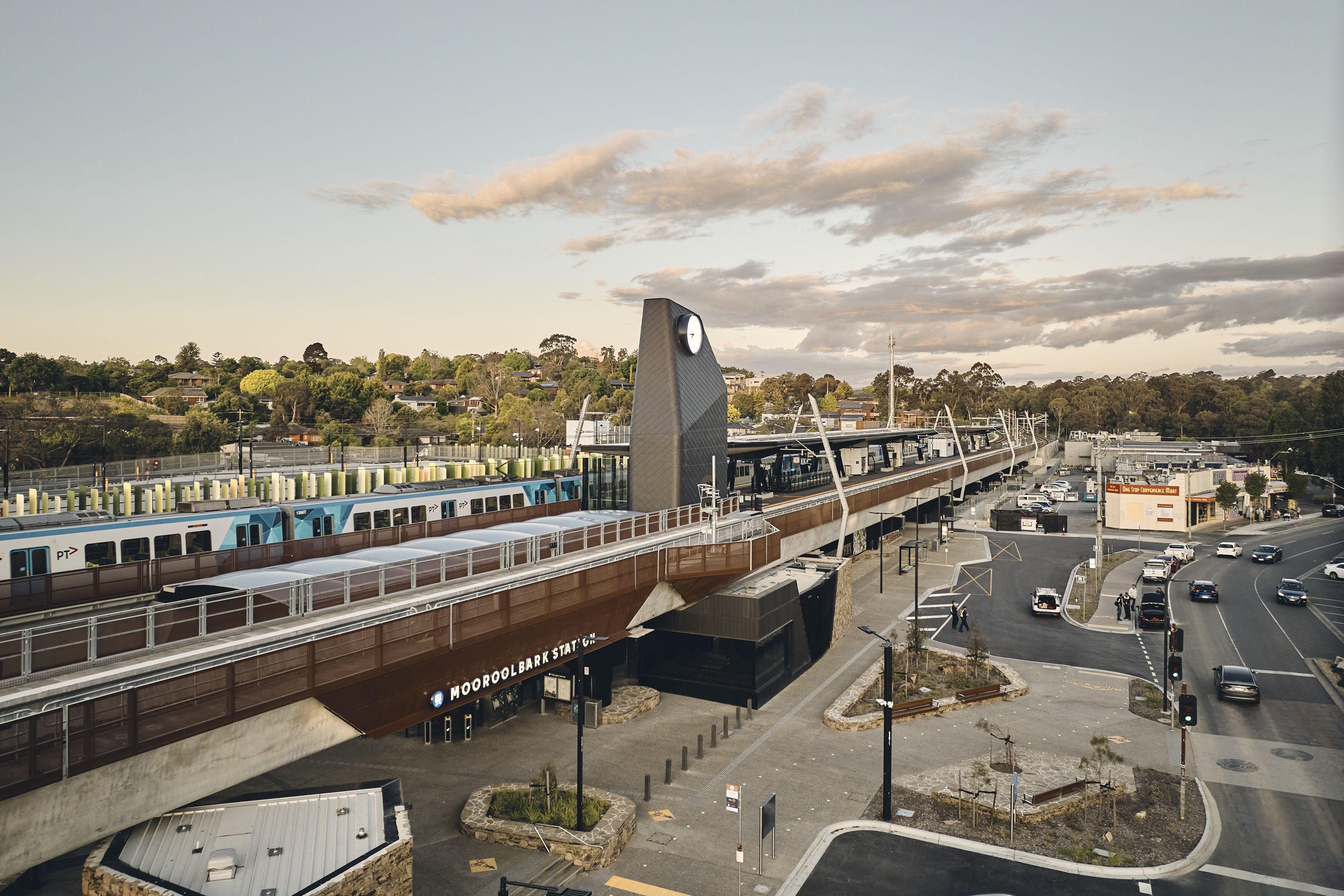
Designed as a sibling station with Lilydale, both stations feature a similar sense of materiality and design expression. We purposely contrasted the visual bulk of the viaducts and support structure, with the handcrafted, natural materiality of zinc and hand-laid local Coldstream mudstone, popularly utilised throughout the Yarra Valley. An ETFE roof system floats between the viaducts, its inflated plastic structure providing a lightweight, maintainable solution that draws natural light into the concourse below. Both stations incorporate towering lift shafts as urban markers, with Mooroolbark’s expressed as a contemporary clock tower clad in a robust snakeskin-patterned zinc, celebrating the symbiotic relationship between time and train travel. Reminiscent of many European examples, the clocktower frames, and acts as an anchor, to the new piazza created on Brice Ave.
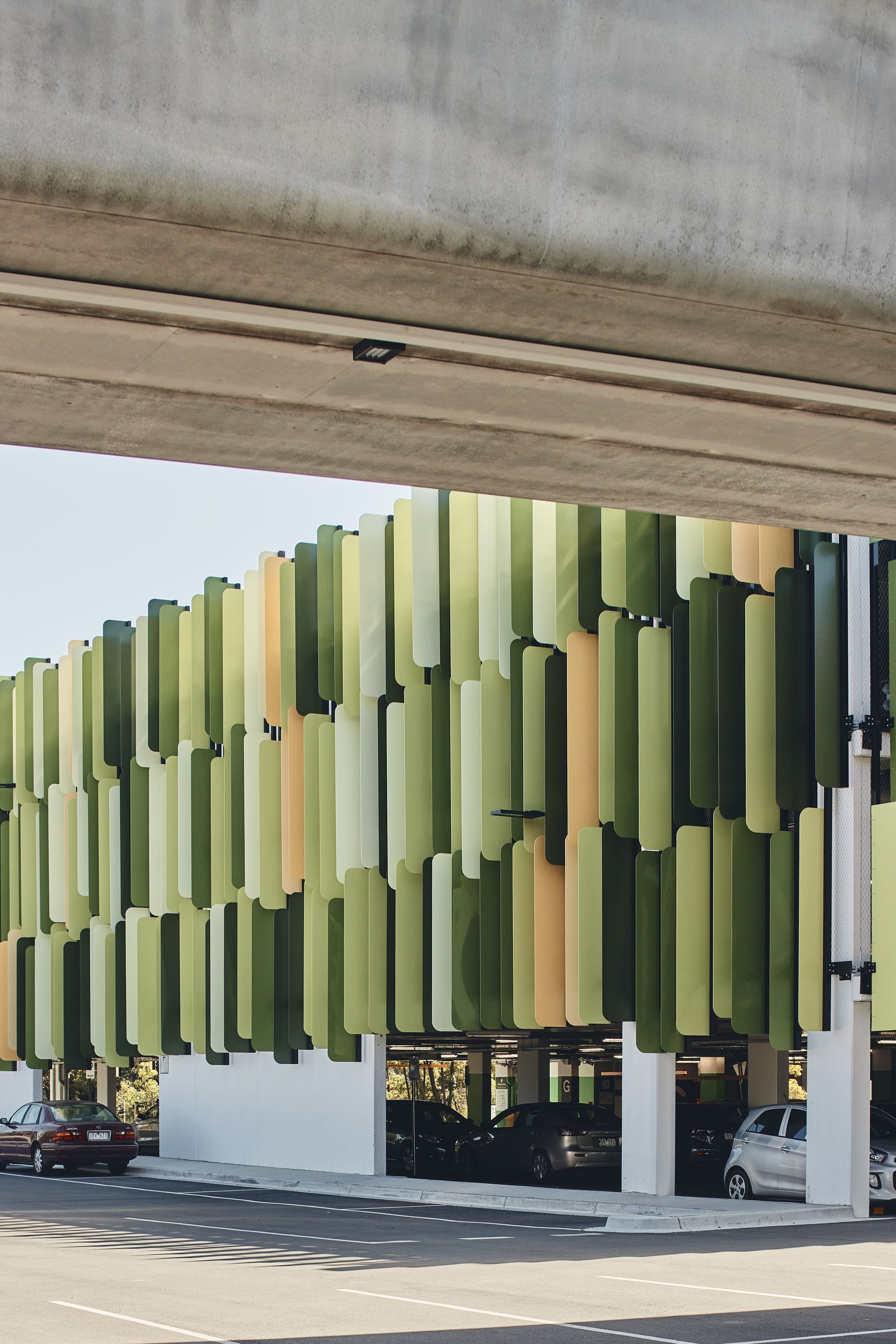
The adjacent 900 space, multi-level commuter carpark represented a significant departure in scale to the local neighbourhood character, requiring a sensitive approach to minimise its visual presence while creating a distinctive identity. We created an array of fins for the façade, applying a range of greens sampled from an image of the nearby Brushy Creek, to effectively dematerialise, or camouflage the building and enable it to appear less bulky in its environment.
Related Projects
Lilydale Station
A welcoming transport hub that connects community
Merinda Park Station
Artwork for this new railway station
South Gippsland Highway Level Crossing Removal
Relieving traffic with a new landmark
Melton Level Crossing Removal
Architectural forms inspired by wondrous, natural basalt column formations