The visit to the amenities, now famously “selfie-central”, offered a different perspective entirely. Despite the foyer’s capacity, the facilities were surprisingly empty, allowing us to appreciate design details that had been months in the making. We couldn’t resist joining the mirror selfie trend ourselves (yes it has become a thing), momentarily forgetting our professional connection to the space.
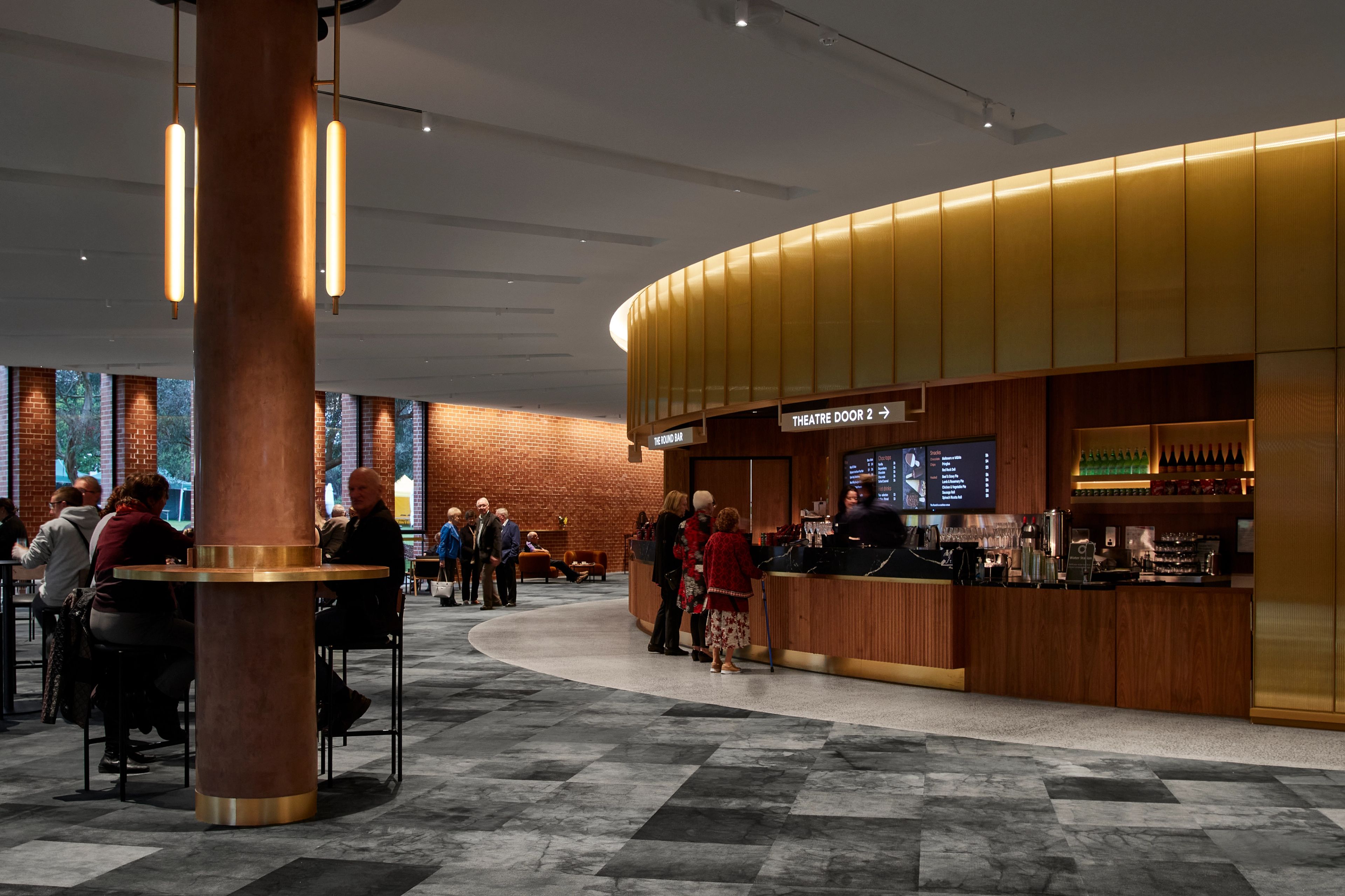
Experiencing the building as regular patrons—no hard hats, no back-of-house access, offered a totally different perspective. Joining the queue for refreshments and navigating the space without our usual project team access reminded us what it feels like to be a patron. Simple interactions, ordering a drink, finding our seats, settling in, revealed the difference between designing for flow and experiencing it firsthand.
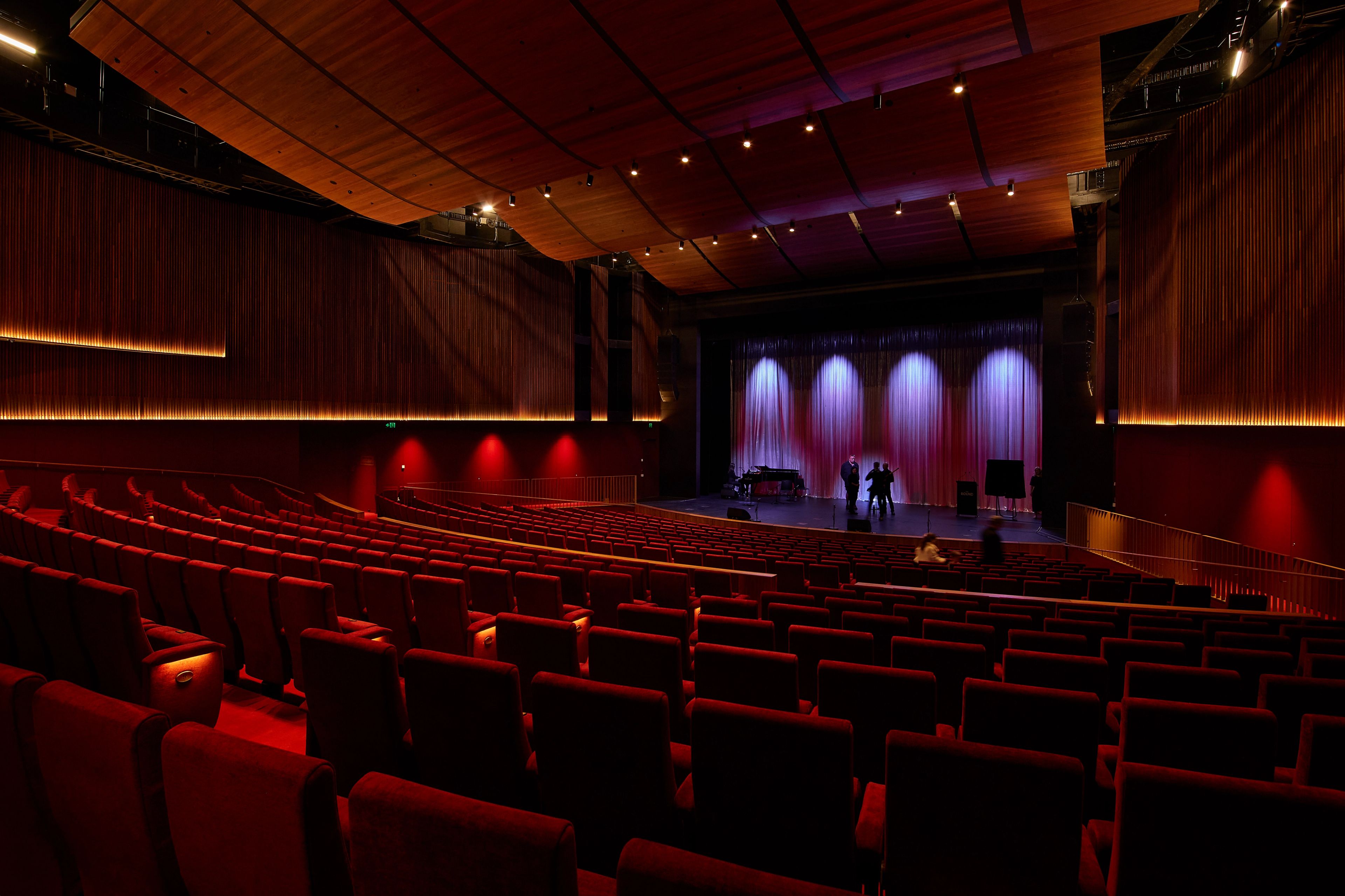
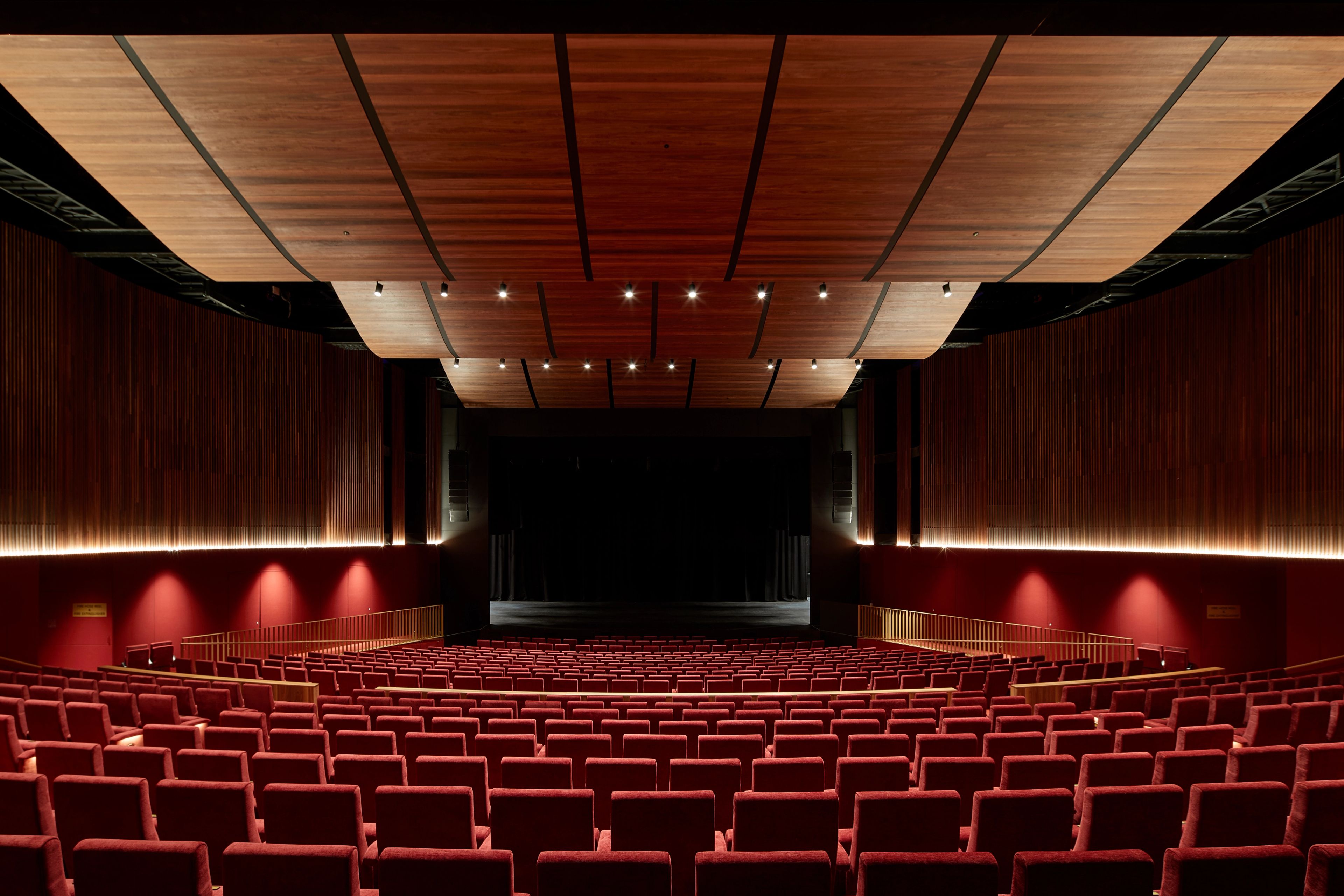
Inside the theatre, familiar materials and finishes transformed from specification items into lived experience. Finding our seats and sitting on the very fabric we’d chosen for fire safety, acoustic performance, and durability, not just aesthetics, became simply comfortable seating. Acoustic treatments and wall linings that had dominated design workshops now functioned invisibly in the background. Liz, our interiors designer, couldn’t help herself; she had to touch all the upholstery and wall linings (some habits die hard).
When the lights dimmed and the performance began, we experienced something drawings and renders can never capture, the moment when architecture recedes and becomes pure atmosphere. Surrounded by an engaged audience, we watched our design fulfill its ultimate purpose: creating space for human connection and shared experience.
This experience reinforced something we know intellectually but don’t always feel viscerally, that successful public architecture isn’t just about technical execution or aesthetic achievement. It’s about creating spaces that people can inhabit naturally, where the design enhances rather than competes with the human activities it supports. It’s easy to get caught up in the technical side of design, but moments like these, sitting in the dark, surrounded by the audience and losing yourself in a show, remind us what it’s really all about.
Projects are not complete when construction ends. They’re complete once they’re lived in. And now this project feels complete to us.